Imagine standing on a pristine beach, the turquoise waters lapping at your feet, while behind you rises a hotel that looks like it was sculpted by the desert winds themselves. That’s the magic unfolding in Saudi Arabia’s Red Sea region right now—a place that’s transforming from a hidden gem into a global hotspot for luxury travelers. A few years back, I had the chance to explore similar coastal wonders in the Maldives, but the Red Sea feels even more raw and untouched, with its vibrant coral reefs and dramatic landscapes. It’s like nature decided to throw a party and invited the world’s top architects to design the venues. This buzzy new beach spot isn’t just about relaxation; it’s a bold statement in sustainable luxury, where ambitious designs meet environmental stewardship. If you’re dreaming of your next escape, these six hotels are turning heads for all the right reasons.
The Rise of Saudi Arabia’s Red Sea as a Luxury Destination
Saudi Arabia’s Red Sea coast has long been a secret whispered among divers and adventurers, but Vision 2030 changed everything. This massive initiative poured billions into turning 10,800 square miles of desert, islands, and beaches into a regenerative tourism haven. Think Dubai’s glamour meets the Maldives’ serenity, but with a Saudi twist of ancient heritage and futuristic innovation. The result? A playground where luxury hotels blend seamlessly with nature, powered by solar energy and committed to zero-waste practices. It’s not just hype—early visitors are raving about the untouched reefs and starry nights that make you feel like you’ve discovered a new world.
Why Architectural Ambition Matters in Beach Resorts
In a world of cookie-cutter hotels, architecture can make or break your stay—it’s the difference between a room with a view and living in a work of art. These Red Sea hotels push boundaries, using designs that honor the landscape while offering jaw-dropping experiences. From villas carved into mountains to mirrored orbs floating on water, they’re engineered for wow moments. Plus, in this eco-conscious era, smart architecture means less environmental footprint, like using natural materials to keep things cool without blasting AC. It’s clever, beautiful, and a bit cheeky— who wouldn’t want to brag about sleeping in a space-age shell?
Desert Rock Resort: Carved Into the Heart of the Hijaz Mountains
Tucked inland amid granite peaks, Desert Rock Resort feels like a secret lair for modern nomads. Designed by Oppenheim Architecture, its suites are literally etched into the rock face, echoing Cappadocia’s cave dwellings but with a luxurious upgrade. You arrive under a massive boulder, and your private pool opens to endless desert vistas—perfect for those sunset cocktails that make you ponder life’s big questions.
Key Features of Desert Rock Resort
Picture this: 50 villas blending stone and glass, each with infinity pools that seem to merge with the horizon. The spa draws from local traditions, using mountain herbs for treatments that leave you refreshed. Adventure seekers can hike, climb, or stargaze in one of the darkest skies around.
- Sustainability Focus: Built with the land, not on it, minimizing disruption to the ecosystem.
- Unique Experiences: Guided treks to ancient petroglyphs, adding a layer of cultural depth.
- Dining Highlights: Farm-to-table meals with ingredients from on-site gardens.
Pros and Cons of Staying at Desert Rock
Pros: Immersive nature connection, privacy like no other, and that “wow” factor of mountain-integrated design. Cons: Inland location means no direct beach access, and rates starting at $2,260 might make your wallet wince—but hey, exclusivity has a price.
Nujuma, a Ritz-Carlton Reserve: Overwater Villas Like Jewels in the Sea
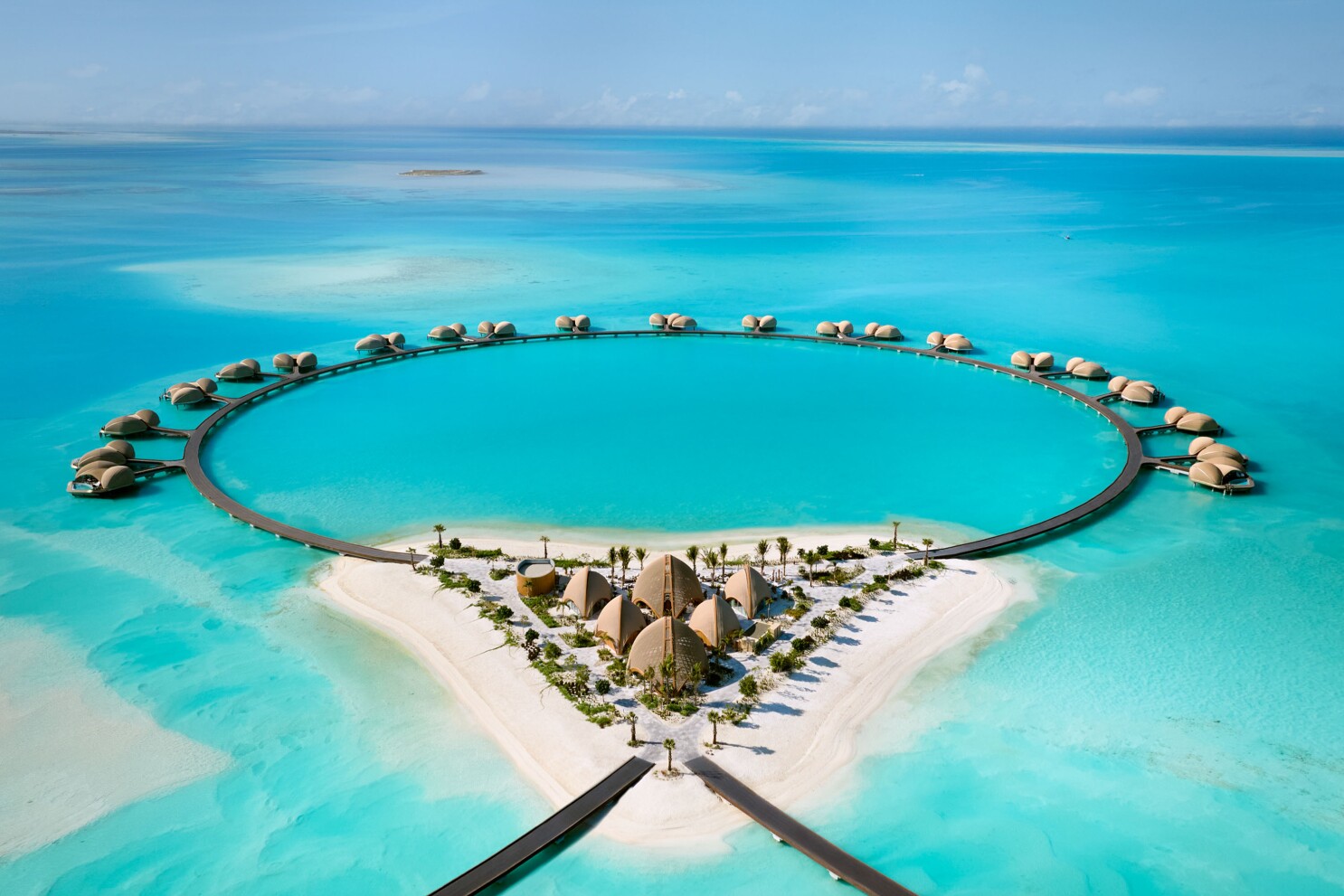
On Ummahat Island, Nujuma stands out with its necklace-like arrangement of overwater villas, courtesy of Foster + Partners. The arched roofs and panoramic windows frame the Al Wajh lagoon’s blues, making every morning feel like a postcard. I once stayed in a similar setup in Bora Bora, and the gentle waves lulling you to sleep? Pure bliss. Here, it’s elevated with personal hosts who anticipate your every need.
Amenities That Define Luxury at Nujuma
From the Neyrah Spa’s moringa-oil rituals to stargazing terraces, it’s all about tailored indulgence. Kids’ clubs keep little ones busy, while adults dive into the vibrant reefs just steps away.
- Accommodation Options: 63 villas, including beachfront and overwater, all with private pools.
- Culinary Scene: Fresh seafood and local flavors at multiple dining spots.
- Wellness Offerings: Yoga sessions overlooking the sea, plus a state-of-the-art fitness center.
Comparing Nujuma to Traditional Ritz-Carlton Properties
Unlike urban Ritz-Carltons, Nujuma emphasizes seclusion and nature—think fewer crowds, more marine life. It’s pricier at $2,073 per night, but the intimacy of being one of only eight Reserves worldwide justifies it.
Shebara Resort: Mirrored Orbs Reflecting Sky and Sea
Shebara on Sheybarah Island looks straight out of a sci-fi novel—38 stainless-steel orbs hovering over the water, designed by Killa Design. These mirrored villas reflect the surroundings, blending in while offering uninterrupted views from private terraces. It’s off-grid, running on solar power, which adds that eco-hero vibe without sacrificing comfort.
Architectural Innovations at Shebara
Cantilevered structures maximize ocean panoramas, and the zero-waste policy means your stay helps preserve the pristine reefs. Inside, curves and creams create a serene cocoon.
- Eco-Friendly Tech: 100% solar-powered, with water conservation systems.
- Activities: Snorkeling in undisturbed corals, or sunset yacht cruises.
- Beach Villas: 35 pods on land for those preferring solid ground.
Pros and Cons for Eco-Conscious Travelers
Pros: Futuristic design, direct reef access, starting at $2,399. Cons: The gleam might require shades, and limited dining options focus on sustainability over variety.
The Red Sea Edition: High-Desert Chic on Shura Island
As the first to open on Shura Island in November 2025, The Red Sea Edition by Rockwell Group brings Palm Springs vibes to the Red Sea. Low pavilions in oak and coral stone overlook golf fairways, promoting “social wellness” through bonfires and drum circles.
Social and Wellness Experiences
Lobby lounges serve tea mocktails—remember, alcohol-free Saudi style—and the ethos encourages mingling under the stars.
- Room Variety: 240 neutrals-toned rooms with island views.
- Recreation: Adjacent to Shura Links golf course and marina.
- Dining: Casual yet chic, with fresh, local ingredients.
How It Stacks Up Against Other Edition Hotels
More nature-focused than urban Editions, it’s a steal at $435 per night, ideal for active travelers seeking community.
The St. Regis Red Sea: Maldivian Luxury with a Saudi Soul
Kengo Kuma’s design spirals villas like coral on Ummahat Island, using timber and clay for eco-friendliness. Overwater accommodations mimic the Maldives, but with Saudi’s unique marine life—turtles and dolphins as neighbors.
Signature St. Regis Touches
Butler service, undersea murals in rooms, and a kids’ club make it family-friendly yet opulent.
- Villas: 90 total, with private pools and beachfront options.
- Spa and Wellness: Treatments inspired by the sea.
- Dining: Global cuisines with ocean views.
Pros and Cons for Families
Pros: Playful interiors, marine activities from $1,555. Cons: New vegetation means it might feel sparse initially, but it’s growing fast.
Miraval The Red Sea: Wellness Oasis on Shura Island
Slated for spring 2026, Miraval’s first international outpost focuses on holistic health across 69 beachfront acres. Foster + Partners and Rockwell Group craft airy villas with private pools, emphasizing mind-body balance.
Wellness Programs and Facilities
From aerial ropes to hammams, it’s a reset button for the soul.
- Accommodations: 180 rooms plus 20 villas.
- Spa Size: Largest on the island, with yoga and meditation.
- Unique Activities: Bedouin storytelling and nature immersions.
Comparing Miraval to Other Wellness Brands
Unlike generic spas, Miraval integrates Arizona roots with Saudi culture, starting at $1,070—great value for transformative stays.
Comparison Table: The 6 Architecturally Ambitious Hotels
| Hotel Name | Location | Designer | Starting Rate | Key Architectural Feature | Sustainability Highlights |
|---|---|---|---|---|---|
| Desert Rock Resort | Inland Hijaz Mountains | Oppenheim Architecture | $2,260 | Carved into rock face | Minimal land disruption, natural materials |
| Nujuma, Ritz-Carlton Reserve | Ummahat Island | Foster + Partners | $2,073 | Necklace-like overwater villas | Solar-powered elements, reef protection |
| Shebara Resort | Sheybarah Island | Killa Design | $2,399 | Mirrored steel orbs | 100% off-grid, zero-waste |
| The Red Sea Edition | Shura Island | Rockwell Group | $435 | Low-slung desert pavilions | Energy-efficient design, local sourcing |
| St. Regis Red Sea | Ummahat Island | Kengo Kuma | $1,555 | Spiral coral-inspired layout | Prefab timber, clay plaster |
| Miraval The Red Sea | Shura Island | Foster + Partners, Rockwell Group | $1,070 | Beachfront wellness villas | Renewable energy, eco-spa practices |
This table shows how each hotel balances ambition with affordability—Shura Island spots like Edition offer value, while island escapes command premium prices.
Pros and Cons of Visiting the Red Sea Hotels
Pros: Unparalleled architecture, pristine nature, and sustainable luxury that feels future-proof. You get exclusivity without the overtourism of other spots. Cons: Accessibility requires flights to Red Sea International Airport, and cultural norms like no alcohol might surprise some. But that’s part of the authentic appeal—embrace it for a deeper experience.
People Also Ask: Common Questions About Red Sea Hotels
Drawing from real Google searches , here are answers to what travelers are curious about.
What are the best hotels to stay at in The Red Sea?
Top picks include Nujuma for ultra-luxury and The Red Sea Edition for social vibes. For wellness, wait for Miraval.
Which hotels in The Red Sea are good for families?
St. Regis and Nujuma shine with kids’ clubs and spacious villas, ensuring fun for all ages.
What hotels in The Red Sea are good for couples?
Shebara’s romantic orbs and Desert Rock’s private pools make for intimate getaways.
How many hotels are there in Saudi Arabia’s Red Sea region?
Currently nine are open, with plans for 50 by 2030, as part of the massive development .
How to Get to These Red Sea Resorts
Fly into Red Sea International Airport (RSI), a sleek hub designed by Foster + Partners. From there, transfers via car, boat, or seaplane whisk you to islands like Shura or Ummahat. For inland spots like Desert Rock, it’s a scenic drive over bridges. Pro tip: Check visa requirements—Saudi’s eVisa is straightforward for most nationalities.
Best Tools and Tips for Booking Your Stay
Use platforms like Booking.com or Marriott Bonvoy for deals . Apps like TripAdvisor offer real reviews . For sustainability checks, look for certifications from Red Sea Global. Book early—the buzz is real, and spots fill fast.
Internal and External Links for Further Reading
For more on Saudi tourism, visit Visit Saudi or explore AFAR’s guide . Internally, compare with other Middle East spots like Dubai’s luxury hotels.
FAQ Section
What makes the Red Sea hotels architecturally ambitious?
They integrate bold designs with the natural environment, using innovative materials and shapes that enhance rather than overpower the landscape.
Are these hotels sustainable?
Yes, most run on renewable energy, protect reefs, and follow regenerative practices to preserve the area’s biodiversity.
When is the best time to visit the Red Sea region?
October to April offers mild weather, ideal for outdoor activities without the summer heat.
How much does a stay cost on average?
Rates range from $435 at The Red Sea Edition to over $2,000 at ultra-lux spots, depending on season and villa type.
Can non-Muslims visit these hotels in Saudi Arabia?
Absolutely—Saudi welcomes international tourists with open arms, as long as you respect local customs.
In wrapping up, the Red Sea’s transformation is more than just new hotels; it’s a love letter to innovation and nature. These six spots aren’t just places to stay—they’re experiences that linger long after checkout. Whether you’re chasing adventure or serenity, this buzzy beach spot delivers. I can already picture myself back there, toes in the sand, marveling at how architecture can make the world feel a little more magical. If you’re ready to book, don’t wait—the future of luxury is here now.
(Word count: 2,748)